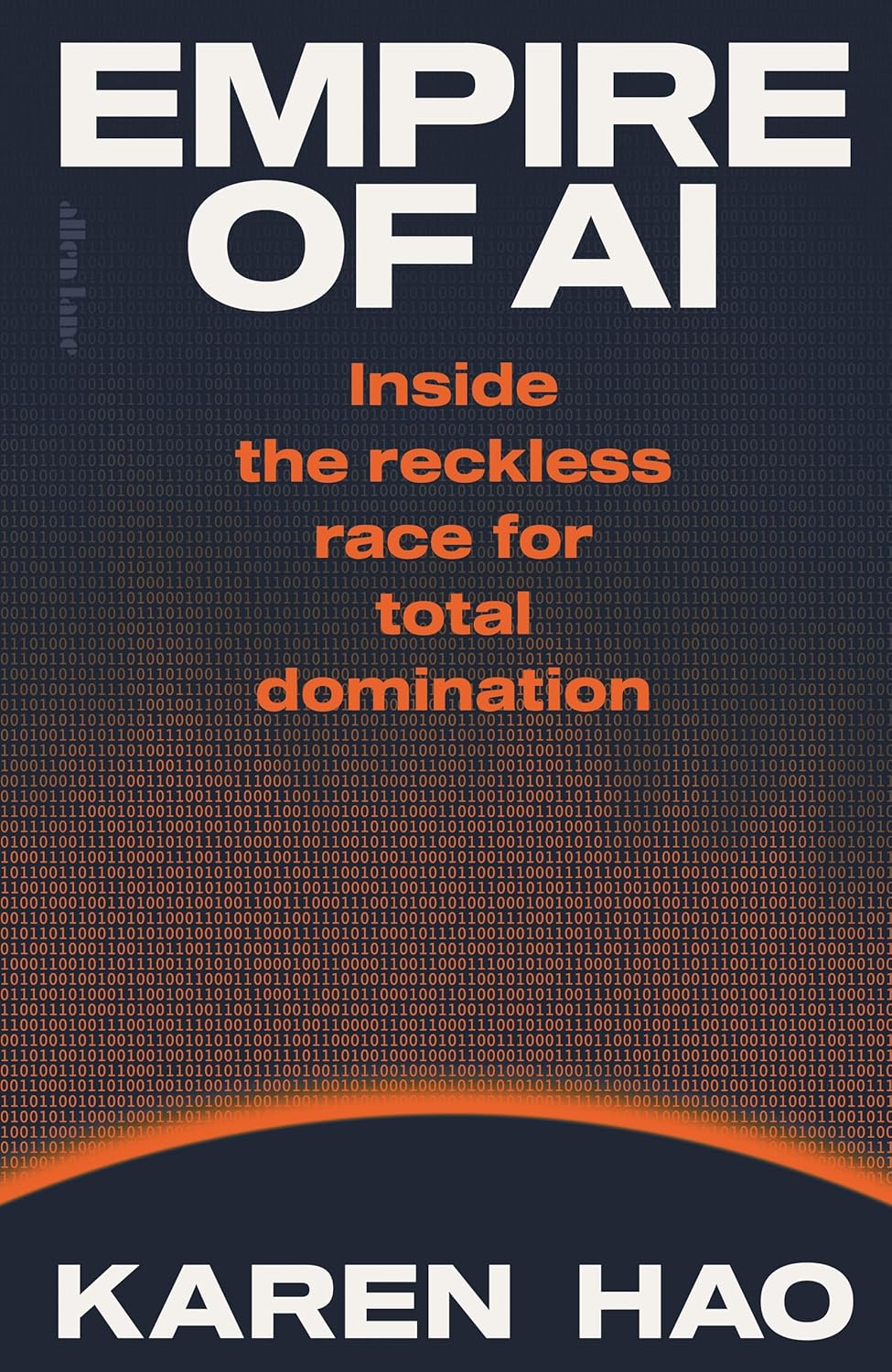
Karen Hao must be amazingly well-connected because this book has so many personal details, emails, text messages and events from inside OpenAI over their first few years of operation, including scenes of what was happening in the boardroom when Sam Altman was temporarily fired. Even if this wasn’t about real events and a real company, the story arc is a compelling modern-day cautionary fairy tale, albeit one where the ending is still being written.
The book starts with the absurd reason that OpenAI was founded in the first place: due to Elon Musk’s obsession with stopping Google from being first to invent super-intelligence. It started in 2012 with Demis Hassabis (DeepMind founder) planting the idea in Musk’s head that advanced AI could pose a threat to humanity that couldn’t be mitigated by “Musk’s fail-safe of colonizing Mars to escape” because “Superintelligence would simply follow humans into the galaxy”. The next year, Larry Page (Google co-founder) got into an argument with Musk about the risks (Musk thought Page was too dismissive) and called Musk “a specist” for favouring the human species. Apparently, that was enough to spark an obsession in Musk about the existential threat of AI, especially if Google developed it. This lead to a series of attempted interventions, including spending an hour in the closet at a party trying (and failing) to talk Hassabis out of selling DeepMind to Google, and ultimately Musk and Sam Altman teaming up with a vision of “creating the Manhattan Project for AI”. They planned to race to create super-intelligence before any for-profit company (especially Google), and openly share the technology for the good of humanity. Thus, OpenAI was born.
This book is about the characters and the social dynamics as much as the business or tech. It walks through the gradual transformation of OpenAI’s mission from transparent non-profit focused on benefiting humanity to closed, for-profit and focusing on growth over mission. Ironically, its aggressive development and early proof-of-concept accelerated the development among other big tech companies (like Google, Meta, Baidu), focusing all AI research on one particular flavour of AI (Large Language Models) and concentrating AI expertise and influence among a few large tech companies, exactly the fate OpenAI was created to prevent!
The other story running through this book is drawing the parallel between big tech and empires. Specifically, in the way that “empires seized and extracted resources that were not their own and exploited the labor of the people they subjugated to mine, cultivate and refine those resources for the empires’ enrichment”. There are several chapters that explore labor exploitation in communities around the world who work in poor and insecure conditions to label data or filter content for models, or artists who have had their work used to train models without their consent and it is now impacting their job prospects, or the extraction of fresh water and power from communities that host massive data centres.
I found this book engrossing and I made my mom read it when she visited. She said there were a lot of names and some jargon to get used to if you haven’t already been following this area. If you are interested in the area and you like character studies or good story-telling I think you’ll like this one to get a good sense of how the story started while we eat our popcorn and watch how it’s going to end. 🍿